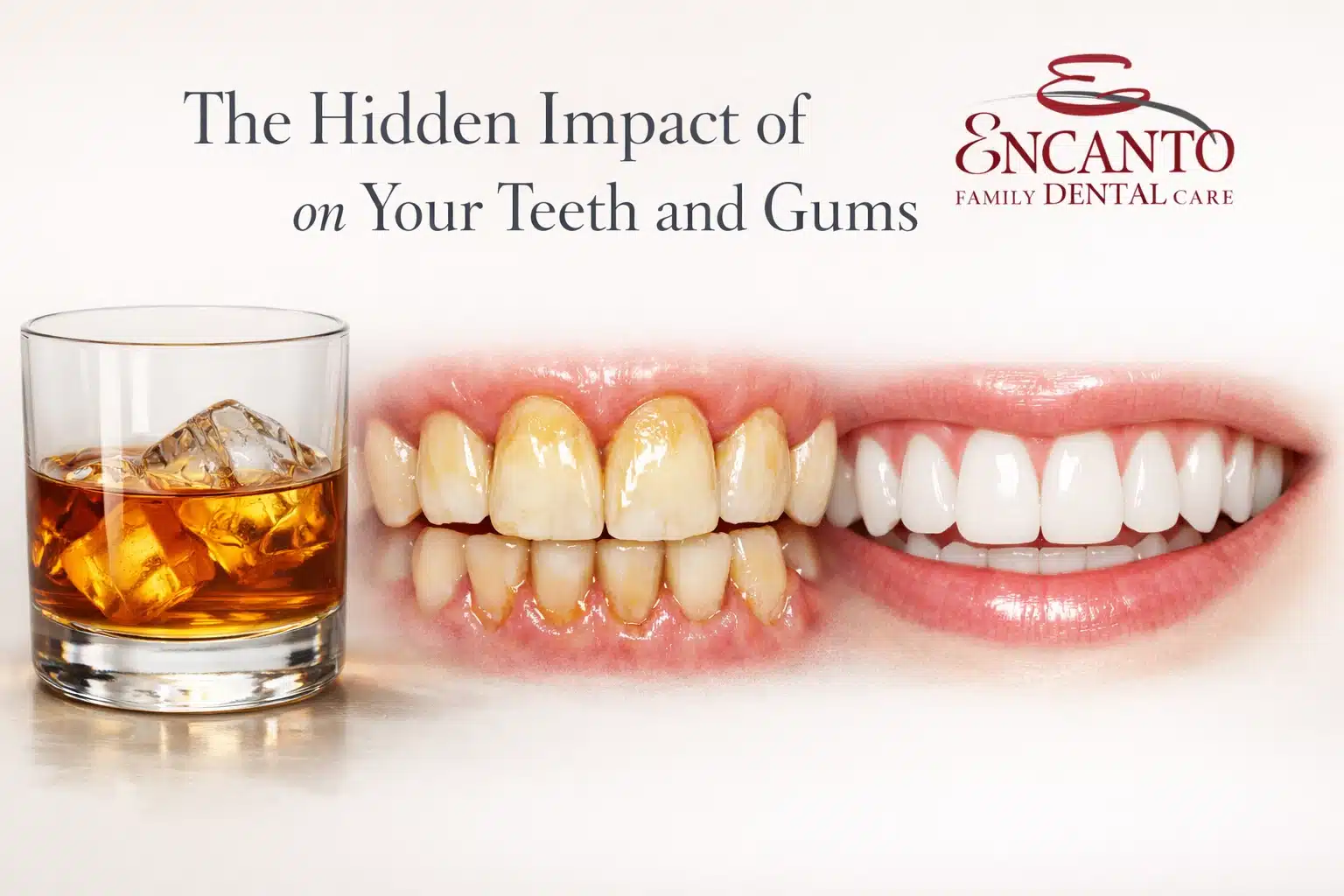
Stories of people drinking alcohol go all around the world, not just at events or in social activities, but also just to take the edge off after a hard day’s work. With one or two glasses of wine or beer, it may seem harmless, but its impact on your general health, in addition to your oral health, can be quite harmful. Even a regular glass of wine can have subtle effects on your teeth and gums that may lead to chronic issues over time and require professional supervision.
In this blog, we are going to reveal how alcohol has hidden dangers to your oral health, with impacts on both teeth and gums as well. Whether you’re guzzling a cocktail at a shindig or enjoying a glass of wine as the sun sets, understanding how alcohol may be stealthily deteriorating your smile is paramount. Now let’s explore why this needs to be handled with care, and how you can avoid doing lasting damage.
The Influence of Alcohol on Oral Health
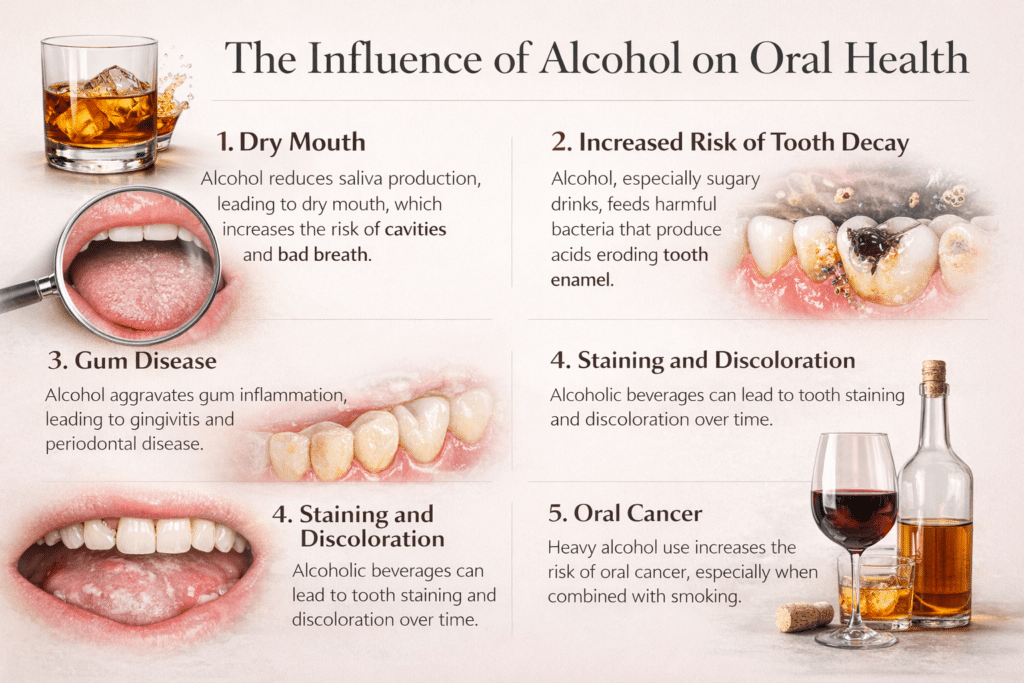
Although so many drink alcohol, it affects your teeth and gums a lot. An alcoholic drink can cause a number of dental issues, including dry mouth and an increased risk of tooth decay and gum disease. Let’s take a closer look at the major ways in which alcohol can impact your oral health:
1. Dry Mouth
Dehydration is one of the most immediate effects alcohol has on your mouth. Alcohol is a diuretic, meaning it increases urination, which then causes us to produce less saliva. Saliva is vital in protecting your teeth and gums by neutralizing acids, preventing plaque formation, and washing away food particles. Less saliva also leaves you more susceptible to cavities, gum disease, and bad breath.
2. Increased Risk of Tooth Decay
Alcohol, particularly sugary cocktails and mixers, creates a happy place in your mouth for bacteria. Bacteria consume sugars and secrete the acids that erode the protective enamel of your teeth, resulting in cavities and other dental diseases. Over time, this can cause significant erosion, necessitating restorative procedures.
It’s important to keep an eye on your alcohol consumption to prevent harming the enamel (the hardest substance in your body). Although sturdy, enamel cannot resist an elongated exposure to sugar over time. If you notice signs of a cavity or if discomfort worsens, consult an emergency dentist in Phoenix.
3. Gum Disease
Another problem that alcohol consumption can make worse is gum disease, or periodontal disease. The acids in alcoholic drinks, along with the mouth-drying effect, can make it easier for plaque and bacteria to build up on your teeth and gums. This causes inflammation, infection, and, eventually, gum recession. Gum disease, if left untreated, can cause tooth loss and other serious outcomes.
4. Staining and Discoloration
Red wine, coffee, and other dark drinks can stain teeth over time. These stains are due to tannins, which accumulate on the enamel and give your teeth a yellow or brown appearance. Although professional cleaning may remove some stains, regular intake of these drinks can cause permanent staining, making it increasingly difficult to achieve a glowy, white smile.
5. Oral Cancer
A treated risk factor for oral cancer that is less talked (yes, I did say talked) about is alcohol consumption. Drinking alcohol and smoking increase the risk of mouth, tongue, and throat cancers. People who drink regularly are at increased risk for these cancers, which can be deadly if detected late. Any person who drinks alcohol regularly must undergo regular check-ups for oral cancer.
Protect Your Teeth and Gums from Alcohol
Here are a few steps you can take to help reduce the adverse effects of alcohol abuse on your teeth and gums:
- Drink Water: When you are drinking alcohol, keep dragging water into your mouth. This counteracts the drying effects of alcohol, which helps maintain saliva production.
- Stay Away from Sugary Mixers: Drinks made with sweet mixers, soda, sugary juices, and fruit punches can contribute to tooth decay. Choose less-sugary drinks, or keep it simple with wine or straight liquor.
- Mouth Rinse: After drinking alcohol, rinse your mouth with water to remove sugars and acids. This way, you can avoid any risk of plaque buildup.
- Maintain Good Oral Hygiene: Brush your teeth twice daily and floss regularly to prevent plaque buildup on your gums. Visiting your dentist for regular scheduled check-ups and cleanings is also important.
- Lessen or Switch Up Alcohol Consumption: If you’re worried about the impact on your oral health, consider lessening as well as switching up to alcohol-free drinks.
Video Source: All rights belong to the original YouTube creator
When to Seek Professional Help?
While a drink or two may seem harmless, just like everything else in life, excess can make an impact on your oral health. If you’ve got signs like chronic bad breath, swollen gums, pain when your teeth are exposed to hot or cold food and drink, or discolored enamel, you should make a dentist appointment as soon as possible. Your Phoenix emergency dentist can help provide urgent care for alcohol-related irritations of your teeth and gums. Regardless of whether it’s a toothache, a cavity that you think might be approaching, or gum issues, getting to your dentist quickly will minimize damage.
We can provide the services you need at Encanto Family Dental Care to help mitigate the long-term effects of alcohol on your mouth. Our team is here to help, whether you need emergency treatment for tooth decay or a routine cleaning to tackle the long-term effects of drinking alcohol.
Addressing Alcohol’s Impact: Your Key to a Lasting Smile
The unseen damage alcohol does to your teeth and gums could be greater than you realise. Alcohol can damage your oral health in subtle ways that most people don’t realize until the damage is done, right down to dry mouth and gum disease. But with good oral hygiene and timely professional dental care, you can protect your smile for years to come.
If you have noticed any changes in your oral health because of alcohol use, or if it’s been a while since your last check-up, don’t delay. Call Encanto Family Dental Care now to book an appointment and take a step toward a healthier smile.
Questions People Ask About Alcohol and Oral Health
Can alcohol lead to bad breath?
Yes, alcohol can cause dry mouth, which reduces saliva flow. This promotes bacterial buildup, leading to bad breath. Drinking water and practicing good oral hygiene can help alleviate this issue.
How does alcohol cause tooth decay?
Alcohol reduces saliva production, which protects teeth from plaque and acids. Sweetened drinks increase bacteria growth and acidity, leading to enamel erosion and cavities. Rinsing with water and brushing regularly can help minimize these risks.
Is alcohol a risk factor for gum disease?
Yes, alcohol dries the mouth, reducing saliva, which helps prevent plaque buildup. This increases the risk of gum disease by allowing bacteria to accumulate on the gums, leading to inflammation, bleeding, and long-term damage if untreated.
Can drinking alcohol affect the color of my teeth?
Yes, alcoholic drinks, especially red wine and coffee, contain tannins that can stain teeth. Over time, these stains become difficult to remove. Regular dental cleanings and minimizing these drinks can help keep teeth whiter.
What should I do if I have gum swelling from alcohol?
If you have swollen gums after drinking alcohol, ensure you hydrate well, maintain good oral hygiene, and avoid sugary drinks. If symptoms persist, consult a dentist to prevent further damage and possible gum disease.
Can alcohol lead to oral cancer?
Yes, alcohol is a significant risk factor for oral cancer, especially when combined with smoking. It can damage tissues in the mouth and throat, increasing cancer risk. Regular screenings and reducing alcohol intake can help mitigate this risk.